

Some loan officers reading this also explore tools like these — only if the problem matches yours.
Not sure which path fits? Ask the assistant — no pitch, just clarity.
MLO Production Strategy Blueprint: While buyers search for these loan guidelines, top-producing Mortgage Loan Officers use automated capture pipelines to convert high-intent searchers into exclusive pre-approvals. Learn how YPN USA automates lead routing and MLO pipeline conversion below.
Table of Contents:
- 1. Executive Overview & Market Impact
- 2. Core Execution Strategies
- 3. Conversion Tech Stack & Next Steps
You pull credit on a borrower at 9 a.m. By the next morning, they’re fielding calls from three competing lenders they’ve never heard of. That’s not a coincidence — that’s the trigger lead machine running exactly as designed. If you’ve been getting pitched trigger lead subscriptions without fully understanding the mechanics or the compliance exposure, this breakdown is for you.
What Are Mortgage Trigger Leads?
A mortgage trigger lead is generated the moment you pull a borrower’s credit as part of a loan application. The credit bureaus log that hard inquiry, flag the record, and package it for resale — typically to competing lenders who have subscribed to the service.
When a mortgage lender pulls a borrower’s credit report through one of the three major credit bureaus — Equifax, Experian, or TransUnion — the bureaus log the inquiry as a “hard pull” tagged as a mortgage credit inquiry. Within hours of the pull, the bureaus make that record available for purchase by other mortgage lenders, packaged as a “trigger lead”: the borrower’s name, address, phone number, basic credit profile, and the fact that they just had mortgage credit pulled somewhere.
The timeline is the thing that stings. The credit bureaus sell that information as a trigger lead to paying marketers within 24–48 hours of the original application or credit pull. Once a consumer triggers, lenders need to respond quickly — preferably within 24 hours — for maximum campaign effectiveness. Your borrower walked into your office, trusted you with their financial life, and by the next business morning they’re being pitched by your competitors. They have no idea it’s happening.
The practice is legal, but customers often report receiving hundreds of calls, texts, and emails. That’s not an exaggeration — it’s the documented borrower experience that ultimately drove federal legislation.
How Credit Bureaus Sell Your Borrower’s Data
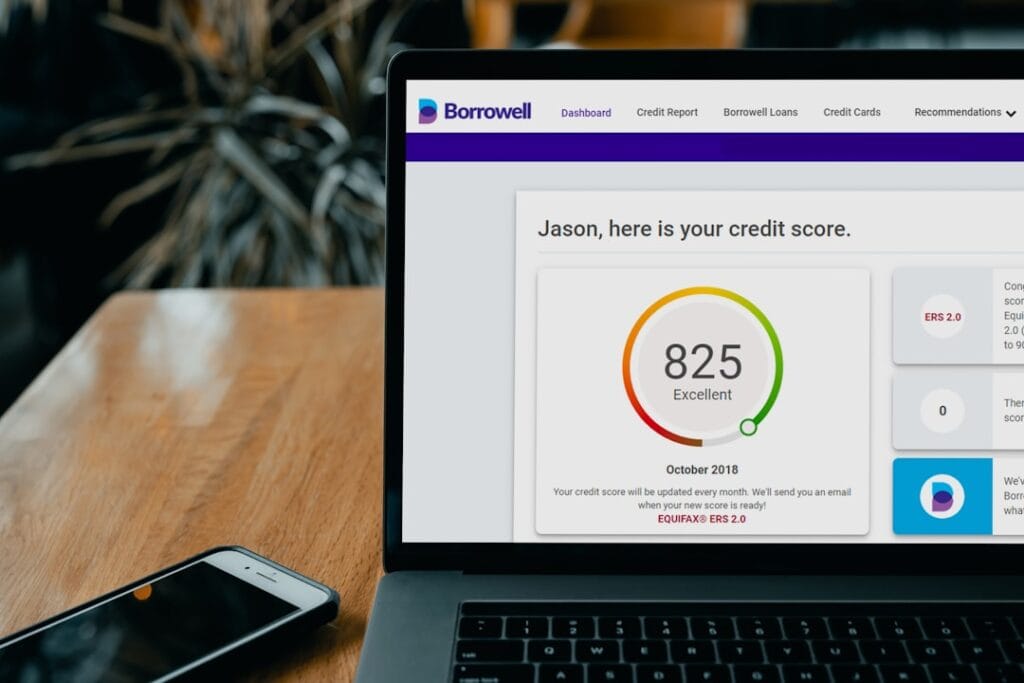
The data flow is straightforward, which is part of what made trigger leads so hard to stop legislatively. Understanding the mechanics helps you explain it to borrowers — and helps you decide whether to play offense, defense, or both.
The Prescreen Framework
“Trigger leads” generally refer to a process where lenders purchase reports from consumer reporting agencies (CRAs) which identify consumers who meet specific criteria and who were recently subject to a credit check in connection with an application for a mortgage loan with another lender. This sits inside the broader FCRA prescreen framework — the same legal mechanism that allows credit card companies to send “pre-approved” offers to consumers who match a credit profile.
A trigger lead generally refers to information a consumer reporting agency compiles on a consumer based on the consumer’s application of credit in a particular credit transaction. The FCRA allows CRAs to create these consumer reports without the express consent of the consumer, meaning the consumer does not initiate the creation of a trigger lead.
There’s one legal guardrail that historically applied: under the Fair Credit Reporting Act, lenders are only allowed to receive these leads for marketing purposes if they use the information to make firm offers of credit to the consumers. That requirement — a real, binding offer, not a vague “we can probably help you” pitch — is the thread regulators have been pulling on for years.
The Reseller Layer
The bureaus don’t always sell direct. A layer of trigger lead resellers buys bulk data from Equifax, Experian, and TransUnion, then redistributes it — often in real time — to subscribing lenders and brokers. The three credit bureaus have created a de facto marketing department for mostly large mortgage companies willing to pay substantial monthly fees for these lists. Smaller shops buy through resellers at per-lead pricing. Either way, the data originates from the same three bureaus.
The big three credit bureaus — Equifax, Experian, and TransUnion — have lobbied against restriction bills and their predecessors. Trigger leads have been allowed under the Fair Credit Reporting Act in part because lawmakers and federal regulators concluded that more competition between mortgage lenders is good for consumers, who often don’t shop around for the best rate. A 2024 survey of consumers by ICE Mortgage Technology found 84 percent of mortgage borrowers only considered one (36 percent) or two (48 percent) lenders. That stat was the bureaus’ best argument. It didn’t hold forever.
Using Trigger Leads Offensively and Defensively

Before the federal restrictions took effect in March 2026, most LOs encountered trigger leads in one of two ways: as a tool to buy, or as a threat to their existing pipeline. Both angles matter — and the compliance exposure on the offensive side was real.
| Approach | Offensive (Buying Triggers) | Defensive (Protecting Pipeline) |
|---|---|---|
| Goal | Intercept active mortgage shoppers before they commit elsewhere | Keep competitors from poaching borrowers you’re already working |
| Mechanism | Subscribe to bureau or reseller trigger feed; receive leads within 24–48 hrs of credit pull | Educate borrowers pre-application; use soft pulls early; advise opt-out |
| Ideal user | High-volume shop with marketing budget and fast follow-up infrastructure | Relationship-driven LO protecting a warm pipeline |
| FCRA requirement | Must make a firm offer of credit — not a generic sales pitch | N/A — defensive posture, no outreach to third-party data |
| TCPA exposure | High — trigger data does not include prior written consent for automated contact | None from trigger data itself |
| Post-HPPA (March 2026) | Largely prohibited unless existing relationship or explicit consumer opt-in | Still fully viable — and now more important than ever |
| Ethical framing | Borrower education angle: “We want to make sure you’re getting the best rate” | Pipeline protection: brief borrowers upfront about what to expect |
The TCPA Problem With Offensive Trigger Use
This is where a lot of LOs got burned. Buying a trigger lead does not give you TCPA consent to call or text that person using an autodialer or prerecorded message. Those are two completely separate legal frameworks — FCRA governs the data purchase, TCPA governs the outreach.
The Telephone Consumer Protection Act regulates business communications with consumers — including those by mortgage companies — via phone, text, and fax. With the FCC’s new 1:1 consent requirements effective from January 27, 2025, mortgage businesses face heightened compliance challenges to mitigate legal risks and penalties.
The 2025 rules significantly tighten restrictions on using third-party lead lists for automated outreach. Any lead from a third-party source — whether purchased, referred, or generated through lead-generation services — requires new, specific written consent before you can make automated contact. Blanket consent from a lead generator won’t suffice unless it explicitly names your business.
TCPA lawsuits have led to multi-million-dollar settlements in the mortgage industry. If you were dialing trigger leads with an autodialer without documented, one-to-one written consent, you were carrying real litigation exposure — regardless of whether the FCRA allowed the data purchase itself.
The Defensive Play: Brief Your Borrowers Before You Pull
The most underused tool in pipeline protection costs you nothing. Before you pull credit, tell your borrower exactly what’s about to happen: “As soon as I pull your credit, other lenders may start calling you within 24 hours. They didn’t get your number from me — the credit bureaus sell that data. Here’s what you can do about it.”
That conversation does three things: it protects the relationship when the calls start, it positions you as the trusted advisor who told them the truth, and it gives you an opening to walk them through opt-out options. Borrowers can prevent the credit bureaus from selling their data by registering with OptOutPrescreen.com, opting out of trigger leads for five years. It only takes 24 hours for new solicitors to stop calling after an opt-out is processed. The catch: opt-out requests can take up to five business days to fully propagate, so this is a pre-application conversation, not a post-pull fix.
Another tactical move: you can use soft pull credit reports during the early stages of the lending process. Unlike hard pulls, soft pulls won’t initiate trigger leads, so you can qualify applicants discreetly. Save the hard pull for when you’re ready to lock.
Regulatory Pressure and the New Federal Law

The trigger lead era as most LOs knew it is over. The Homebuyers Privacy Protection Act, signed into law in 2025 and made effective on March 5, 2026, amended the Fair Credit Reporting Act to restrict when and how credit bureaus may provide trigger leads. This wasn’t a close call legislatively — it passed unanimously in both chambers, signaling widespread concern over data privacy in the digital mortgage landscape.
What the Law Actually Says
Under provisions of the Homebuyers Privacy Protection Act, consumer reporting agencies are prohibited from selling trigger leads tied to mortgage credit inquiries except in specific, narrowly defined situations. A lender may only receive a trigger lead if it already maintains a qualifying relationship with the consumer — such as an existing mortgage or deposit account — or if the consumer has explicitly opted in to receiving such solicitations. In addition, any permissible trigger lead must correspond to a legitimate firm offer of credit rather than being used purely for marketing outreach.
Practically speaking: third parties can no longer purchase consumer mortgage inquiry data from credit bureaus. The only entities still permitted to access this data are the originator of the consumer’s current mortgage, the servicer of that mortgage, or an insured depository institution or credit union holding the consumer’s account. If you’re a non-bank lender or independent broker without a prior relationship, the traditional trigger lead pipeline is effectively closed.
The State-Level Wave That Preceded Federal Action
Federal law didn’t arrive in a vacuum. States had been moving for years. Arkansas, Georgia, Idaho, Iowa, and Utah each passed legislation in 2025 that regulates the use of trigger leads, and the Texas Department of Savings and Mortgage Lending promulgated regulations governing the use of trigger leads in late 2024. Going back to at least 2007, other states including Connecticut, Rhode Island, Maine, Kansas, Kentucky, and Wisconsin had also enacted comparable requirements.
The state laws varied in their specifics but shared a common thread: consumers are often unable to distinguish whether a call is from the mortgage company that received their application or another company trying to solicit new business. Utah’s law, for example, prohibits using prescreened trigger lead information to solicit a consumer who has applied with another institution if the solicitor fails to state clearly in the initial communication that they are not affiliated with the original lender.
The broader coalition pushing for federal action was substantial. 42 attorneys general signed a bipartisan letter urging Congress to pass the Homebuyers Privacy Protection Act of 2025, with the legislation seeking to end the abusive use of mortgage credit trigger leads while preserving their use in narrowly defined, consumer-consented circumstances.
What LOs Should Expect Going Forward
The federal law changes the math on offensive trigger lead strategies for most independent LOs and non-bank lenders. The volume of purchasable trigger data has dropped sharply. The compliance risk on any remaining outreach — especially automated contact — remains high under TCPA’s 1:1 consent framework.
What hasn’t changed: the underlying need to reach borrowers at the moment of peak intent. The post-HPPA environment accelerates the shift toward life-stage triggering from public records — court filings, property transfers, probate, divorce — which surfaces borrower intent signals before a credit pull ever happens, with no credit bureau dependency and no FCRA entanglement. That’s the structural alternative worth understanding.
Frequently Asked Questions
The Bottom Line on Mortgage Trigger Leads
Trigger leads were a legal, high-speed tool for reaching active mortgage shoppers — and a compliance minefield for anyone who didn’t understand the FCRA/TCPA split. The Homebuyers Privacy Protection Act, effective March 5, 2026, has effectively ended the traditional trigger lead model for most non-bank lenders and independent brokers. The defensive play — briefing borrowers before the credit pull, using soft pulls early, and building the kind of relationship that survives a competitor’s phone call — has never been more important.
But the deeper lesson is about lead strategy architecture. If your pipeline depends on intercepting borrowers after a credit pull, you’re always playing catch-up. The LOs who win in a post-trigger-lead environment are the ones who identify borrower intent signals earlier — before the application, before the credit pull, before the competition even knows the borrower exists.
YPN USA’s approach is built on exactly that premise: Life-Stage Triggering from public records — probate filings, divorce decrees, property transfers — that surface high-intent borrowers 30 to 90 days before they ever walk into a lender’s office. No credit bureau dependency. No FCRA trigger lead entanglement. Just early-stage intent data from court records, delivered exclusively to one LO per ZIP.
Two ways to take the next step: Check the probate and divorce filing volume in your county to validate the opportunity in your market — then claim your ZIP before another LO in your area does. Exclusivity is the whole point.
Frequently Asked Questions
Are mortgage trigger leads legal?
Trigger leads were legal under the Fair Credit Reporting Act (FCRA) for decades, provided the purchasing lender made a firm offer of credit to the consumer. That changed with the Homebuyers Privacy Protection Act, signed by President Trump on September 5, 2025 and effective March 5, 2026. The law now prohibits credit bureaus from selling mortgage trigger lead data to unrelated third parties unless the consumer has explicitly opted in or the purchaser has a qualifying existing relationship with the borrower.
How fast do trigger leads hit the market after a credit pull?
Typically within 24 to 48 hours of the original credit pull. Some bureau products, like Experian’s Prospect Trigger Report, can deliver data as fast as 24 hours after the inquiry. This is why borrowers often start receiving unsolicited calls the morning after they apply for a mortgage.
Can I opt my borrowers out of trigger leads before pulling credit?
Yes — and you should be having this conversation before every hard pull. Borrowers can register at OptOutPrescreen.com to prevent the credit bureaus from selling their data, opting out for five years or permanently. The opt-out takes up to five business days to fully process, so this needs to happen before the application, not after. You can also use a soft pull during early qualification stages — soft pulls do not trigger the lead generation process.
What’s the TCPA exposure when calling trigger leads?
Significant. Buying a trigger lead under the FCRA does not give you TCPA consent to contact that person via autodialer or prerecorded message. Those are two separate legal frameworks. The FCC’s one-to-one consent rule, effective January 27, 2025, requires specific written consent naming your business before any automated outreach. TCPA violations in the mortgage industry have resulted in multi-million-dollar settlements. Manual outreach to trigger leads carries less risk, but documented consent is always the safest position.
How do I know if my pipeline is being triggered by competitors?
The clearest signal: borrowers start mentioning unsolicited calls or texts from other lenders shortly after you pull their credit. If you’re hearing this consistently, your pipeline is being triggered. The fix is proactive: brief every borrower before the credit pull about what trigger leads are and what to expect. Walk them through the OptOutPrescreen.com opt-out. Use soft pulls during early qualification. And build the kind of relationship where a competitor’s cold call doesn’t move the needle — because your borrower already trusts you.
Scale Your Mortgage Pipeline with YPN USA
Automate cold lead acquisition, instant SMS/email follow-ups, and AI workflow management for MLOs.
Schedule a Demo TodayExplore Top MLO Platform Comparisons
Scale Your Mortgage Pipeline with YPN USA
Automate cold lead acquisition, instant SMS/email follow-ups, and AI workflow management for MLOs.
Schedule a Demo TodayExplore Top MLO Platform Comparisons
Next Steps in the MLO Automation Series:
- Previous Guide: Exclusive vs Shared Mortgage Leads: Real Cost Math
- Next Guide: Fresno Mortgage Leads for High-Converting MLOs
3. Conversion Tech Stack & Next Steps
Books that sharpen your edge
- $100M Leads by Alex Hormozi — The modern lead-generation playbook
- Never Split the Difference by Chris Voss — Negotiation skills for rate conversations and Realtor deals
- Fanatical Prospecting by Jeb Blount — The discipline of keeping your pipeline full
- Full Focus Planner — Daily execution system for solo producers
As an Amazon Associate, YPN USA earns from qualifying purchases. Recommendations are independent of price.
Is your ZIP code still open?
One loan officer per territory — exclusive borrower leads, no shared pools. Check availability free. No credit card.
Check My ZIP →